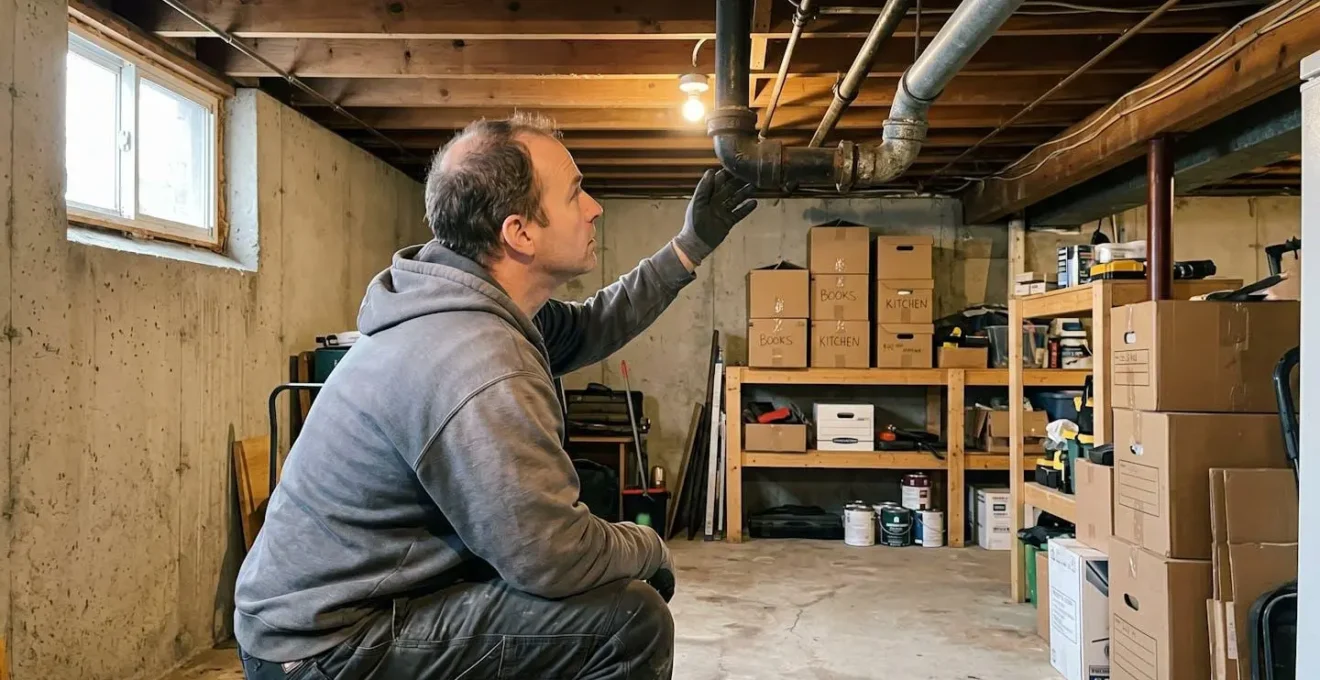
Home inspection reports across Southwestern Ontario frequently flag “aging plumbing infrastructure” without offering actionable timelines. A 65-year-old cast iron drain stack might be perfectly sound in one Waterloo home while a 55-year-old system in Cambridge demands urgent replacement. The difference rarely comes down to age alone — water chemistry, soil acidity, and installation quality create wildly divergent deterioration curves that generic lifespan charts ignore entirely.
Understanding when aging plumbing crosses from monitored maintenance concern into urgent replacement territory requires more than generic age-based timelines. Professional assessment balances multiple deterioration factors — water chemistry, soil conditions, installation quality, and usage intensity — that homeowners rarely encounter in simplified online guides. This framework helps distinguish between preventive optimal timing and emergency intervention necessity.
The decision becomes particularly pressing when inspection reports flag “aging infrastructure” without quantifying actual failure probability. Homeowners need actionable risk categorization that translates pipe condition into budgeting timelines and contractor scheduling windows.
Your pipe failure risk assessment in 30 seconds:
- Cast iron and galvanized pipes don’t fail at fixed ages — water quality and installation matter more
- Red zone (act within 6-12 months): recurring leaks, severe pressure drop, or visible deterioration
- Yellow zone (plan for 1-3 years): pipes over 60 years old with minor symptoms
- Green zone (monitor annually): pipes under 50 years with no symptoms in good water conditions
The anxiety Sarah feels staring at her 1968 Waterloo home’s plumbing isn’t unusual. Three contractors gave her quotes ranging from 4,800 CAD to CAD 9,500 based on regional market rates for “eventual” replacement, but none clarified whether that means this year or in five years. One inspector noted “typical aging” while another warned of “imminent failure risk.” The gap between those assessments leaves homeowners paralyzed between premature spending and catastrophic water damage.
What transforms aging pipes from a monitoring task into an urgent liability depends on factors inspection reports rarely quantify. Regional water chemistry in the Region of Waterloo, freeze-thaw cycle exposure in Cambridge basements, and the quality of 1960s-era installations create risk profiles that age-based guidelines miss entirely. Understanding where your system falls on that spectrum determines whether you’re budgeting for next spring or watching carefully for another decade.
Why pipe age alone doesn’t predict failure risk?
The “50-year lifespan” figure repeated across generic plumbing guides creates false precision. Two identical homes built in 1970 in Kitchener can have drastically different pipe conditions in 2026 based on variables homeowners rarely consider. Water with high mineral content accelerates galvanized pipe corrosion through electrochemical reactions that strip zinc coating from interior surfaces. Conversely, soft water with low pH attacks cast iron through different chemistry, creating pinhole leaks where harder water might form protective scale deposits.
Soil conditions surrounding buried drain lines matter just as much. The clay-heavy soils common in parts of Guelph retain moisture and acidity that corrode cast iron from the outside simultaneously with internal deterioration. Homes on sandier ground experience slower external corrosion despite identical pipe age. Installation quality introduces another variable — poorly supported horizontal drain runs develop bellied sections where water pools, creating constant moisture contact that accelerates rust-through failure compared to properly sloped installations.
Regional variation that matters: Southwestern Ontario’s freeze-thaw cycles place unique stress on already-corroded pipes. A pipe weakened by 60 years of gradual corrosion might survive indefinitely in stable temperatures but rupture during the first hard freeze once wall thickness drops below critical thresholds.
According to updated 2025 plumbing code requirements, the regulatory focus has shifted toward preventing corrosion-related contamination and leaks rather than mandating replacement at specific ages. The new standards for condensate drainage and chemical contamination protection reflect industry recognition that failure timing depends on condition assessment, not calendar math. A 70-year-old system maintained in chemically neutral conditions might outperform a 45-year-old system exposed to aggressive water chemistry since installation.
The most commonly overlooked factor is usage intensity. A home occupied by two retirees places different demands on drain systems than one housing a family of five running multiple showers, laundry loads, and dishwashers daily. Higher flow volumes through corroded galvanized pipes accelerate the scouring effect that removes remaining zinc coating, while low-use systems deteriorate more slowly despite identical age.
The replacement urgency spectrum: assessing your situation
Rather than asking “how old is too old,” the decision framework that licensed plumbers actually use combines age with symptom severity and building-specific risk multipliers. Contractors like arbuckleplumbingsolutions.com approach pipe assessment through multi-factor analysis that categorizes systems into action zones based on failure probability within specific timeframes.
The spectrum runs from immediate replacement necessity through proactive optimal timing to continued monitoring with deferred action. Where your system falls determines budget allocation and contractor scheduling — red zone situations demand quotes within weeks, yellow zone allows 12-18 month planning windows, green zone supports monitoring-based approaches with gradual savings accumulation.
- Red Zone — Replace within 6-12 months:
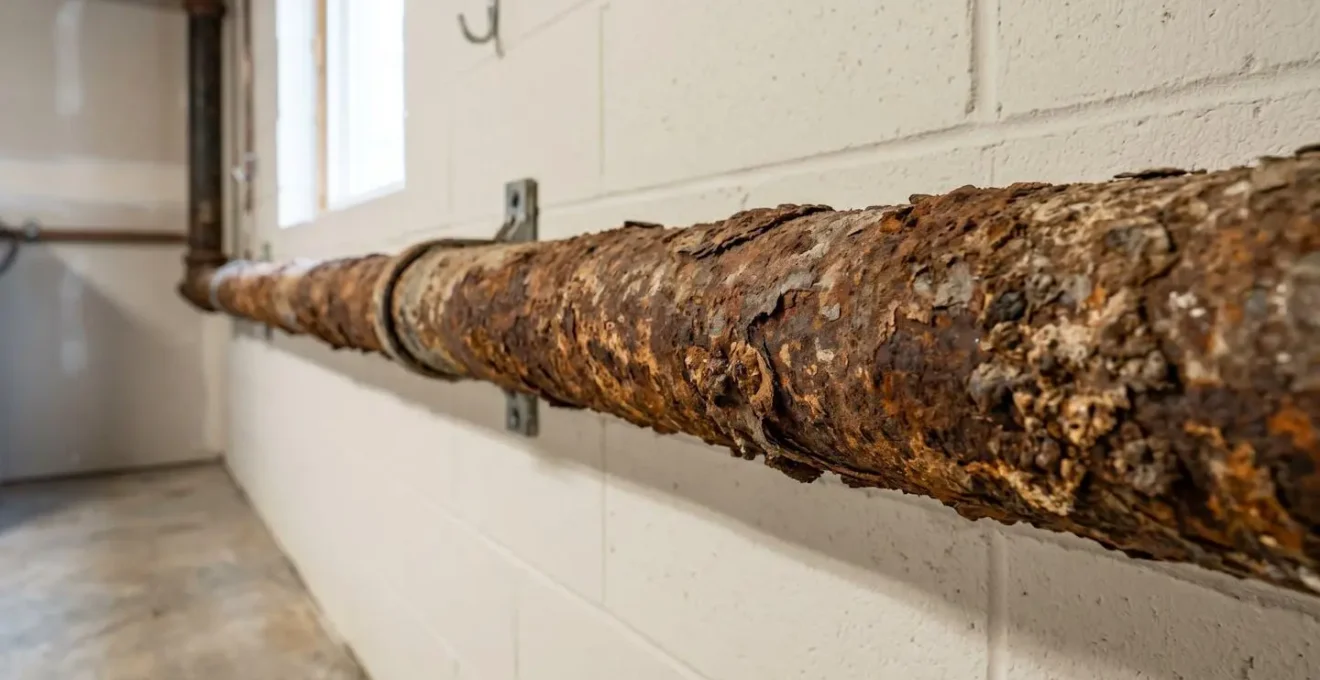
Recurring leaks requiring multiple repairs, major pressure loss throughout the home, daily discolored water, visible exterior corrosion with flaking metal, pipes installed before 1960, or camera inspection showing 60%+ internal diameter reduction.
- Yellow Zone — Plan replacement in 1-3 years:
Occasional rust-colored water (especially morning first-draw), moderate pressure drop compared to municipal supply, pipes 55-70 years old, minor visible corrosion, or living in areas with known aggressive water chemistry.
- Green Zone — Monitor and budget gradually:
No visible symptoms, pipes under 50 years old, water quality reports showing neutral pH and moderate hardness, no history of leaks, properly supported horizontal runs without bellying.
Camera inspection technology provides the most definitive assessment for drain lines. A licensed plumber can insert fiber-optic cameras through cleanout access points to visualize internal corrosion, scale buildup, and remaining wall thickness without destructive investigation. For galvanized supply lines, pressure testing combined with flow rate measurements reveals diameter restriction that external inspection misses entirely. These diagnostic tools transform subjective age-based guesses into objective condition-based decisions.
Winter freeze risk for corroded pipes: If assessment places you in red or yellow zone and winter is approaching, prioritize replacement before freeze-thaw cycles begin. Already-corroded pipes are significantly more vulnerable to burst during temperature extremes common in Southwestern Ontario.
Red zone: replacement within 6-12 months
Active leak history defines red zone status more reliably than age. A pipe that has required two or more repair interventions within 18 months signals systemic failure rather than isolated weak points. Each repair addresses visible symptoms while leaving equally deteriorated adjacent sections untouched — the next failure typically occurs within 6-18 months as corrosion propagates along the pipe length.
Water pressure measurements below 40 PSI at fixtures when municipal supply delivers 60PSI+ indicates severe internal diameter restriction in galvanized lines. Visible exterior deterioration on accessible sections reliably predicts worse conditions in concealed areas. Cast iron showing rust staining, flaking metal, or weeping joints has typically lost 40-60% of original wall thickness at those locations.
Yellow zone: proactive replacement timeline (1-3 years)
The yellow zone represents the optimal window for planned replacement — symptoms indicate advancing deterioration without immediate crisis. Homeowners in this category benefit from comparison shopping among contractors, scheduling work during convenient seasons, and budgeting gradually rather than emergency financing.
Rust-colored water appearing intermittently, particularly after periods of non-use like vacation absences, signals active internal corrosion in galvanized supply lines. Pipes approaching or exceeding 60 years of service enter elevated failure probability regardless of current symptoms. Industry data for the Great Lakes region suggests cast iron drain pipe service life typically ranges between 50 and 80 years, with the wide range reflecting water and soil chemistry variation. Galvanized supply lines in the same region commonly require replacement between 40 and 70 years of age according to plumbing industry experience.
Green zone: monitor and budget
Pipes under 50 years old in homes with documented neutral water chemistry and no symptom history justify continued monitoring rather than proactive replacement. The key distinction involves active assessment rather than passive neglect — annual visual inspection of accessible sections, water quality awareness, and gradual savings accumulation prepare homeowners for eventual replacement without premature action.
Establishing baseline measurements enables tracking deterioration rates. Documenting current water pressure at multiple fixtures, photographing visible pipe sections, and noting any minor discoloration creates comparison points for future assessment. Starting a dedicated replacement savings fund even in green zone status eliminates financial barriers when symptoms eventually appear. Setting aside approximately CAD 150-200 monthly builds sufficient funds for average replacement costs within 3-4 years.
Cast iron vs galvanized: which fails first in Southwestern Ontario?
The two legacy pipe materials common in pre-1980 Ontario construction deteriorate through entirely different mechanisms that regional conditions affect unevenly. Cast iron drain and vent systems corrode from both interior and exterior surfaces, while galvanized supply lines fail primarily through internal corrosion that restricts flow before causing leaks. Understanding which system presents higher immediate risk depends on local water chemistry and soil characteristics specific to Southwestern Ontario municipalities.
Comparative data collected and current as of January 2026.
| Pipe Type | Typical Lifespan (Ontario) | Primary Failure Mode | Regional Risk Factors | Warning Signs |
|---|---|---|---|---|
| Cast Iron (drains) | 50-80 years | Rust-through perforation, joint separation | Acidic soil conditions, freeze-thaw cycles, exterior moisture exposure | Recurring clogs, sewage odor, visible rust staining, dampness near drain lines |
| Galvanized Steel (supply) | 40-70 years | Internal corrosion, progressive diameter reduction | Mineralized water chemistry, zinc coating depletion, high flow velocity | Low water pressure, rust-colored water, frequent sediment filter clogging |
Regional water quality data from municipalities like the Region of Waterloo influences which pipe type reaches critical failure thresholds first. Areas with moderately hard water (150-250 mg/L calcium carbonate) tend to see galvanized supply line failure precede cast iron drain deterioration by 5-15 years, as mineral content accelerates zinc coating depletion while forming protective scale layers inside cast iron drains. Conversely, softer, slightly acidic water reverses that pattern by preventing protective scale formation in cast iron while having less aggressive effect on galvanized zinc coatings.
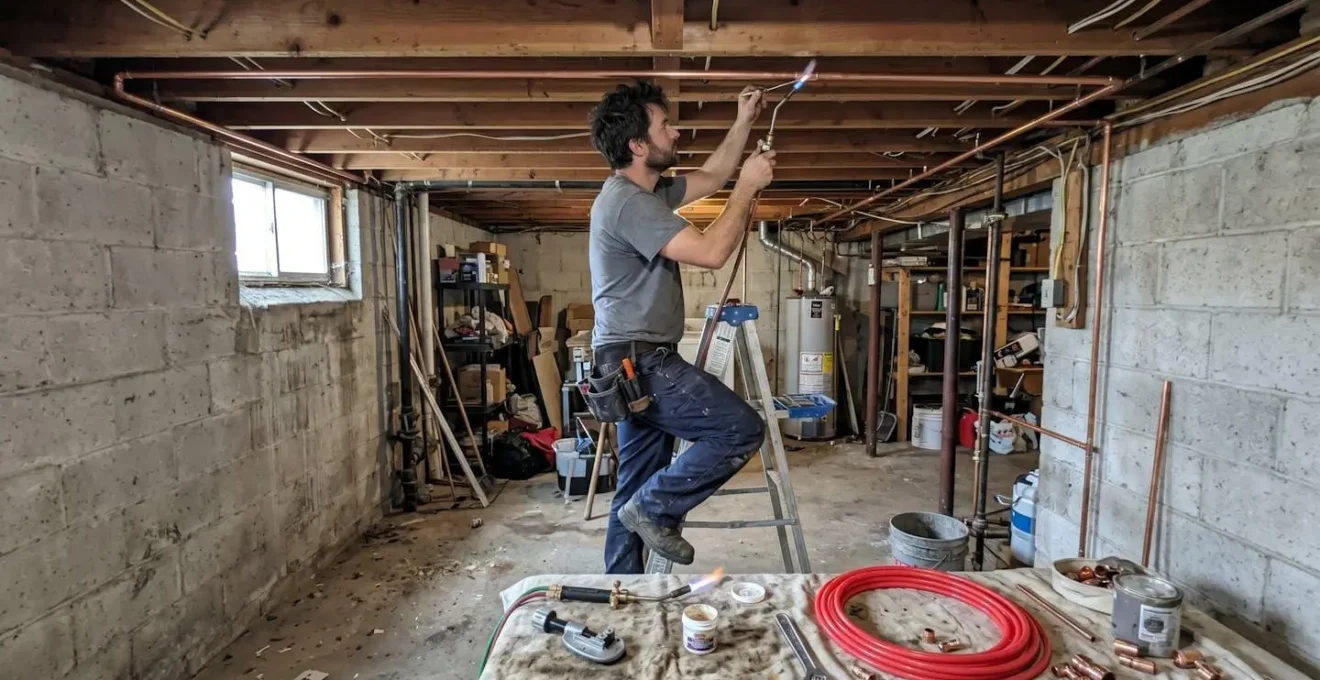
Compliance with Ontario Building Code standards effective January 2025 requires replacement installations to meet updated pipe material and sizing specifications. The 2024 code revisions introduced stricter conformance requirements for pipe materials, shifting from certification-based compliance to engineering proof of standard conformance. This regulatory evolution reflects industry movement toward modern materials like PEX and copper that eliminate the corrosion vulnerabilities inherent in cast iron and galvanized systems.
What professional replacement actually involves (and costs)
The financial comparison that shifts replacement from expense to investment involves comparing planned replacement costs against emergency repair premiums. Contractors across Southwestern Ontario typically quote whole-home re-piping between 5,200 CAD and CAD 11,500 based on 2026 regional averages, depending on home size, accessibility, and scope. That same work performed under emergency conditions — burst pipe flooding, immediate service demands, expedited permits — can carry 40-60% cost premiums according to contractor pricing patterns while forcing decisions under crisis pressure rather than informed evaluation.
Scope definition determines where quotes fall within that range. A 1,200 square foot bungalow with accessible basement ceiling might qualify for lower-range pricing, while a two-story 2,400 square foot home with finished basement requiring drywall removal pushes toward upper range costs. Timeline expectations for typical Southwestern Ontario homes run 3-7 working days for complete replacement depending on configuration complexity, with contractors generally restoring water service each evening during multi-day projects.
Building permit requirements under Ontario regulations add CAD 300-600 to project costs depending on municipal fee structures. Licensed plumbers handle permit applications and inspections as part of professional service, but homeowners should verify permit inclusion in quotes rather than assuming automatic coverage. The permit process typically adds 5-10 business days to project timelines between application and inspection approval, which affects scheduling for time-sensitive replacements. Considering proper home maintenance against hazards helps homeowners understand how proactive plumbing upgrades fit within broader property protection strategies that prevent costly emergency interventions.
- Verify Ontario College of Trades licensing and request license number for independent confirmation
- Confirm building permit acquisition is included in quoted scope and timeline
- Request specific pipe material recommendation with justification based on your water conditions
- Clarify whether quote includes old pipe disposal and drywall repair or only plumbing work
- Request written warranty details covering both materials and labor with specific duration
Modern pipe materials eliminate the corrosion mechanisms that make cast iron and galvanized systems eventual liabilities. PEX (cross-linked polyethylene) resists chemical degradation from water chemistry variations while providing freeze-damage tolerance absent in metal pipes. Copper offers proven 80+ year service life in most water conditions with minimal maintenance requirements. Both materials meet or exceed National Plumbing Code of Canada 2025 standards for residential installations, providing regulatory compliance assurance that aging legacy systems increasingly fail to meet.
If professional assessment reveals red or yellow zone status, replacement before listing a home for sale often increases sale price and prevents buyer negotiation leverage. Market data from Southwestern Ontario real estate transactions suggests homes with documented recent plumbing upgrades often command premium pricing compared to similar properties with aging infrastructure requiring buyer assumption of replacement costs. Green zone pipes can be disclosed without immediate replacement, though providing inspection documentation demonstrating low-risk status strengthens buyer confidence.
Scope and limitations: This guide provides general risk assessment frameworks and cannot replace a professional inspection of your specific plumbing system. Pipe deterioration rates vary significantly based on local water chemistry, soil conditions, and installation quality unique to each property. Cost estimates reflect Southwestern Ontario averages as of January 2026 and may vary based on home configuration, accessibility challenges, material selection, and contractor availability in your specific municipality.
Risk disclosure: Delaying replacement of severely corroded pipes can lead to sudden failures causing extensive water damage. Insurance industry data shows average water damage claims from burst pipes in Ontario range from CAD 8,000 to CAD 15,000, covering flooring, drywall, mold remediation, and content damage. Emergency replacement during active flooding can carry 40-60% cost premiums compared to planned work according to contractor pricing patterns due to urgent service demands and limited contractor negotiation ability. Undetected slow leaks behind walls can cause mold growth and structural damage before becoming visible, multiplying total repair costs beyond pipe replacement alone. Understanding humidity reduction to prevent mold becomes critical when water damage from failed pipes creates conditions for mold colonization affecting indoor air quality and health. For assessment of your specific situation, consult a licensed plumber certified by the Ontario College of Trades or a home inspector registered with the Ontario Association of Home Inspectors who can evaluate your system’s actual condition and provide property-specific recommendations.