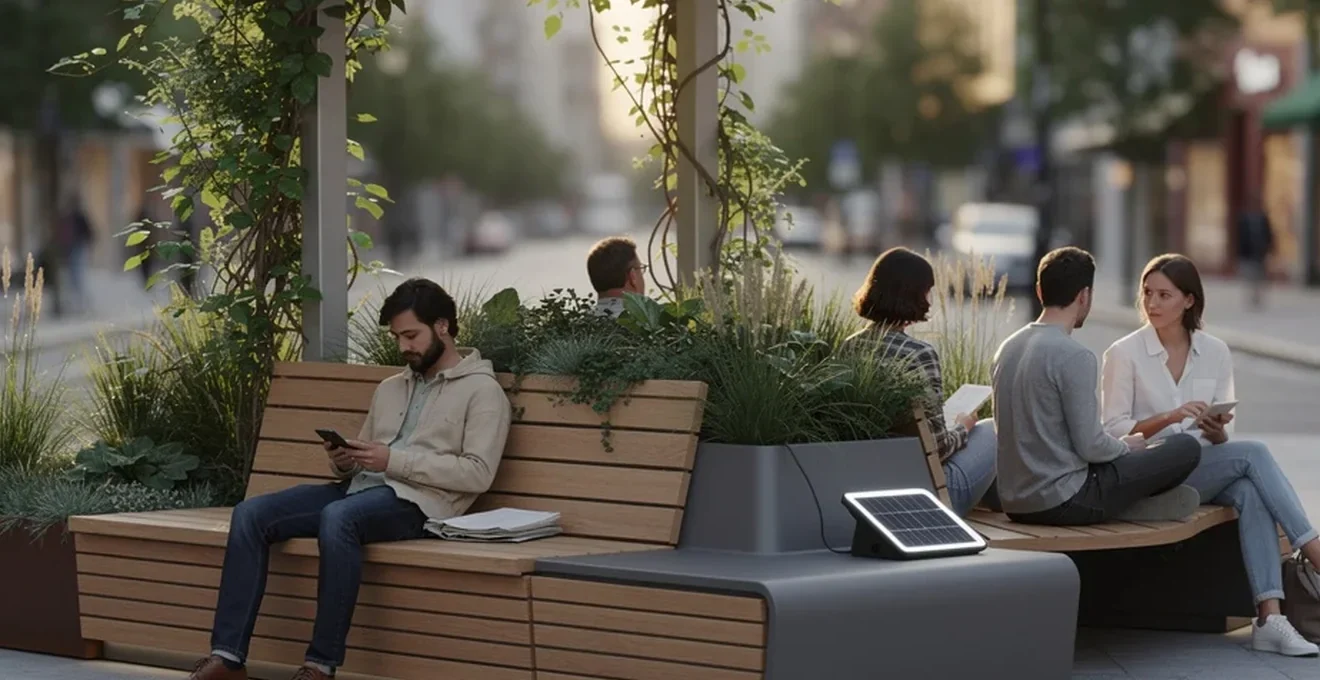
People linger in public spaces when those spaces give them a reason to stay. Comfortable seating, shade, greenery and a sense of safety all play a part in whether someone pauses for ten minutes or walks straight through. Street furniture is central to this equation: it shapes how a space feels, who it welcomes, and how long people are willing to remain in it. As urban populations grow and town centres compete for footfall against online retail, councils and developers are looking more carefully at how benches, shelters, planters and smart amenities can turn a thoroughfare into a destination. This article explores the theory behind outdoor dwelling, the practical furniture typologies that support it, and real-world examples of streetscapes that have successfully encouraged people to stay outside longer.
Placemaking theory and the psychology of outdoor dwelling
Understanding why people choose to stay in a public space rather than pass through it draws on decades of urban design theory. These ideas remain the foundation for how street furniture is planned and positioned today.
Jan gehl’s “life between buildings” framework applied to urban seating
Danish architect Jan Gehl argued that the spaces between buildings, rather than the buildings themselves, determine whether a city feels alive. His framework distinguishes between necessary activities (walking to work, catching a bus) and optional activities (sitting, chatting, watching the world go by). Optional activities only happen when the physical environment supports them, and seating is one of the clearest enablers. A street with well-placed benches invites people to stop; a street without them pushes people through as quickly as possible. This principle underpins much of modern urban seating design, where benches are positioned not just for function but to actively encourage people to pause and engage with their surroundings.
William whyte’s triangulation effect in public space design
Urbanist William Whyte observed that certain features in public spaces prompt strangers to interact with one another, a phenomenon he called triangulation. A street performer, an interesting sculpture, or even a well-placed piece of furniture can act as a shared point of interest that gives people a reason to strike up conversation. Benches arranged to face a focal point, such as a water feature or planting display, rather than lined up against a wall, make this kind of incidental social contact more likely. This is one reason why seating clusters oriented towards one another, rather than isolated single seats, tend to generate more genuine community interaction.
Biophilic design principles and Prospect-Refuge theory
Humans have an innate preference for environments that combine a sense of shelter with a clear view outward, a concept known as prospect-refuge theory. Street furniture can be arranged to satisfy this instinct: a bench positioned with its back to a wall or planting, but facing an open plaza or street, offers both protection and visibility. Incorporating planters, trees and other greenery alongside seating also taps into biophilic design principles, softening the urban landscape and making outdoor areas more pleasant and interesting to occupy. Trees additionally provide shade, helping to cool streets in warmer months and making outdoor dwelling more comfortable for longer periods.
Social cohesion metrics linked to Street-Level furnishing
Social connection is understood to be a core human need, and the presence of well-integrated street furniture has a measurable role in supporting it. When furniture is properly designed into a public space, it creates identity and a sense of place, which in turn supports increased social connection. Litter bins, for example, contribute to this by keeping areas clean and inviting, which fosters a sense of shared responsibility among users. Given that a large majority of England’s population lives in urban areas, the cumulative effect of these small design decisions across many streets and squares has a significant bearing on community cohesion at scale.
Bench typologies and ergonomic seating configurations
Not all seating serves the same purpose. The choice of bench type has a direct effect on how long people stay, who feels comfortable using the space, and how social interaction unfolds.
Backless perch seating versus traditional slatted benches
Backless perch seating suits transient use, such as a quick rest while waiting for a bus or checking a phone, but it discourages longer stays because it offers less support. Traditional slatted benches with backrests and armrests, by contrast, are better suited to encouraging people to settle in for longer periods, read, eat lunch or watch passers-by. The choice between the two typologies should reflect the intended dwell time of a location: transitional spaces may favour perch seating, while parks, squares and waterfronts benefit from more substantial bench designs.
Modular seating clusters for conversational grouping
Grouping seating into clusters, rather than spacing individual benches along a route, supports conversation and group use. Modular systems allow planners to configure seating around a shared feature, such as a tree, planter or piece of public art, creating a natural gathering point. This approach reflects the same principle behind tree protection guard rails and grills that double as informal seating: a single piece of infrastructure serving both a protective and a social function.
Adjustable and convertible furniture: the fatboy concrete seat case study
Flexible seating that can be reconfigured for different uses or events allows a public space to adapt over time. Convertible furniture, which might shift between individual seating and communal arrangements, gives town planners the ability to respond to changing footfall patterns and community needs without a full furniture replacement programme, supporting the long-term adaptability that evolving public spaces require.
Ada-compliant and universal design bench specifications
Accessible design ensures that outdoor seating serves the whole community, not just able-bodied adults. Benches with armrests provide crucial support for elderly users and those with mobility issues, while wide, smooth paths leading to seating areas make spaces navigable for wheelchair users and people with pushchairs. Universal design should be considered from the outset of any street furniture specification, rather than retrofitted, to ensure public spaces genuinely promote equality of access.
Shade structures, pergolas and microclimate regulation
Comfort is a prerequisite for lingering outdoors, and shade is one of the most important comfort factors, particularly during warmer months or in exposed urban corridors.
Cantilevered canopy systems for UV mitigation
Canopy structures that shield seating and gathering areas from direct sun make outdoor spaces usable for longer stretches of the day and across more of the year. Positioning these structures over benches, cycle parking or waiting areas extends the practical hours during which a space can be comfortably occupied.
Green pergolas and vertical planting integration
Pergolas combined with vertical planting deliver shade while also contributing the environmental and aesthetic benefits associated with greenery in urban settings. Plants soften the hard edges of a streetscape, and in summer, the additional cooling effect of vegetation-covered structures helps offset the heat generated by paved surfaces and buildings.
Misting installations in High-Heat retail corridors
In particularly exposed retail streets or plazas, misting systems can supplement shade structures by actively cooling the surrounding air. While a more specialist and costly intervention, this kind of microclimate management can make a meaningful difference in areas where heat would otherwise drive people away from outdoor seating and retail frontages.
Smart street furniture and IoT-Enabled public amenities
Technology is increasingly integrated into street furniture, adding new layers of utility that give people additional reasons to spend time in public spaces.
Solar-powered charging benches: the soofa bench model
Benches fitted with solar panels and charging points allow people to power their devices while resting outdoors, turning a simple seat into a genuine destination. This kind of integration means a bench is no longer just a place to sit, but an incentive to leave the house, whether to work outdoors on a laptop or simply to recharge a phone during a break.
Wi-fi-enabled kiosks and digital wayfinding totems
Kiosks offering free Wi-Fi and digital wayfinding help visitors orient themselves within a town or city while keeping them connected. These installations support longer visits by removing the practical barriers, such as poor signal or unfamiliarity with the area, that might otherwise cut a visit short.
Sensor-driven footfall analytics for furniture placement
Sensors that track pedestrian movement give planners data on how a space is actually used, informing where seating, lighting and other furniture should be positioned for maximum benefit. This evidence-based approach helps avoid the underutilisation or obstruction that can result from poorly planned furniture placement in space-constrained areas.
Material selection and durability standards for outdoor installations
The materials used in street furniture affect not only how a piece looks, but how well it withstands constant public use, weather exposure and the risk of vandalism.
Corten steel versus recycled HDPE plastic lumber
Corten steel develops a stable rust-like patina that provides both a distinctive aesthetic and long-term weather resistance, making it a popular choice for contemporary street furniture. Recycled HDPE plastic lumber, meanwhile, offers a durable, low-maintenance alternative that also supports sustainability goals by reducing waste and reliance on virgin materials. The choice between the two often comes down to the desired visual character of a space alongside budget and maintenance considerations.
Anti-vandalism coatings and Graffiti-Resistant finishes
Certain materials and constructions, such as stainless steel, can deter vandalism outright, and even where an attempt is made, cleaning and repair remain straightforward and cost-effective. Anti-graffiti coatings extend this protection further, allowing markings to be removed quickly without damaging the underlying finish. Well-maintained furniture also sends a signal that a space is cared for, which itself discourages further antisocial behaviour.
Weathering performance in coastal and Salt-Air environments
Furniture installed near coastlines or in salt-air environments faces accelerated corrosion risks, making material selection particularly important in these settings. Specifying finishes and metals rated for coastal exposure helps avoid premature failure and keeps long-term maintenance costs under control, which matters given that budgetary constraints, including ongoing upkeep, are among the biggest challenges facing public realm projects.
Case studies in successful streetscape revitalisation
Several well-known public space projects demonstrate how thoughtful furniture and landscape integration can transform how people use and experience urban environments.
Copenhagen’s superkilen park furniture strategy
Superkilen in Copenhagen brought together furniture and objects reflecting the diverse cultural backgrounds of the surrounding neighbourhood, creating a public space with a strong and distinctive sense of identity. The result is a park that functions as a shared gathering point precisely because its furniture reflects and celebrates the community it serves, reinforcing the idea that street furniture can express local character rather than simply blend into the background.
New york’s high line seating and landscape integration
The High Line demonstrates how seating integrated closely with planting and landscape design can turn a repurposed piece of infrastructure into a sustained visitor destination. Benches positioned to take in views, combined with extensive greenery running the length of the walkway, encourage visitors to slow down and linger rather than simply pass through, illustrating the value of pairing seating with an engaging landscape setting.
Melbourne’s laneway parklet programme
Melbourne’s laneways have become known for transforming previously underused spaces into vibrant social settings through the careful addition of seating, planting and shelter. This kind of parklet approach reflects the broader case for investing in attractive streetscape furniture: appealing public spaces tend to increase foot traffic for nearby cafés and retailers, while also giving cities distinctive, photogenic environments that strengthen local identity and draw in both residents and visitors.